Types of Automotive Engines: Gasoline, Diesel, Hybrid & Electric
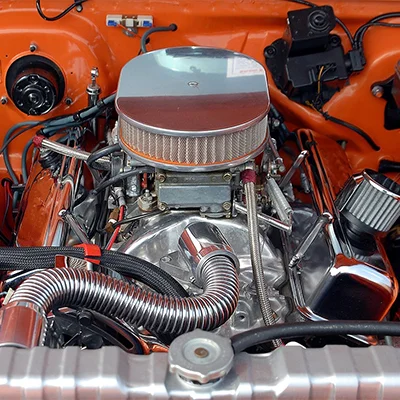
There isn’t a single “best” engine anymore. That’s probably the easiest way to start this conversation.
Today, when you look at the design and sale of vehicles, the combination is in fact becoming more complex, not less. Gasoline, diesel, hybrid, electric--it is all still in the game.
And depending on who you ask, each one is “the future.”
For anyone trying to understand the types of automotive engines from a business point of view, the real question isn’t which one wins. It’s where each one fits.
Internal combustion engine (ICE): continuing to do the majority of the work.
Despite all the EV discussion, the internal combustion engine (ICE) is ubiquitous.
It is easy to lose the fact that since most conversations revolve around the next thing. However, in the real world, most of the vehicles that are used in the world are still powered by gasoline and diesel engines. That’s not going to change overnight.
The basic idea hasn’t changed either—fuel burns, energy is released, and the vehicle moves. What has evolved is the strain of engine efficiency and emissions. That is where it begins to get tricky.
Gasoline engines - straightforward, familiar, yet not the best.
Gasoline engines are most readily comprehensible and perhaps the simplest to coexist with.
They employ spark ignition, implying that a spark plug ignites the fuel-air mixture. It is an old system and nearly all the mechanics know how to handle it.
From a practical standpoint, they offer:
- lower upfront cost
- smoother driving feel
- easy availability of service
But here’s the thing—when you start looking at long-term fuel use, they’re not very efficient. That’s where they begin to lose ground, especially when compared in a gasoline vs diesel engines discussion.
Diesel engines — efficiency comes with trade-offs
Diesel engines work differently. No spark plugs. Just high compression that causes the fuel to ignite on its own.
That difference improves fuel efficiency and torque. This is the reason why diesel is so common in trucks and other commercialized vehicles.
The diesel is normally used in the case when the vehicle is moving and long distances are to be covered.
But it’s not a clean win. Emission systems have become more complicated. Costs have gone up. Regulations haven’t exactly been friendly either.
So diesel hasn’t disappeared—it’s just become more situation-specific.
Hybrid vehicle engine technology — not just a backup plan anymore
Hybrids used to feel like a temporary solution. That’s not really the case now.
With hybrid vehicle engine technology, the goal is pretty straightforward—use fuel when necessary, use electricity where it helps.
What actually happens while driving is a bit more dynamic:
- electric motor helps during acceleration
- engine takes over at steady speeds
- braking energy gets reused
Immediately you start to research how hybrid and electric car engines work, you quickly see that hybrids are not merely a matter of saving money. They are concerned with smarter use of energy.
Plug-in hybrid vehicles (PHEV): a safer transition
Plug-in hybrid vehicles (PHEV) are interesting because they don’t force a full shift.
You can drive short distances on battery power, and then switch to fuel when needed. No range anxiety, no complete dependency on charging stations.
This is important to businesses, more than it may appear. It enables slow adoption that is not altering all at once.
Electric vehicle powertrain — fewer parts, bigger changes
The electric vehicle powertrain is a completely different setup.
No engine. No fuel tank. Just a battery and a motor.
That’s what defines battery electric vehicles (BEV).
From a mechanical point of view, it’s actually simpler. Fewer moving parts, less wear and tear. However, as a business, it also presents new challenges charging infrastructure, sourcing batteries, initial expenditures.
Advantages of electric vs gasoline engines in cars
Comparing EVs with traditional engines, the attention is paid to emissions, most of the time. However, that is not the only benefit of electric vs gasoline engine in cars.
Electric vehicles are more efficient. They waste less energy. They also deliver power instantly, which changes the driving experience.
Maintenance is lower too, since there are fewer components that can fail.
That said, it’s not all straightforward. Charging time and infrastructure still matter, especially for commercial operations.
Automotive engine comparison — depends on usage more than anything
A proper automotive engine comparison isn’t about listing features. It’s about context.
- Gasoline works well for everyday driving
- Diesel works for heavy-duty use
- Hybrid works when flexibility is needed
- Electric works best in controlled, urban environments
That’s why all these options still exist. Each one solves a different problem.
Difference between gasoline diesel hybrid and electric engines
At the simplest level, the difference between gasoline diesel hybrid and electric engines comes down to how energy is used.
- gasoline and diesel burn fuel
- hybrids use both fuel and electricity
- electric vehicles run entirely on stored energy
That difference directly affects engine efficiency and emissions, which is why regulations are pushing the industry in certain directions.
Comparison of ICE and electric vehicle powertrains
If you look at the comparison of ICE and electric vehicle powertrains, the contrast is pretty clear.
ICE systems are mechanical and fuel-dependent. Electric systems are easier to do mechanically but more dependent on electronics and software.
Suppliers, manufacturing processes and even service networks are already starting to be impacted by this shift.
Which automotive engine type is best for efficiency and performance
There is no one correct answer to the question of the best type of automotive engine in regard to efficiency and performance.
It is actually a matter of the usage of the vehicle.
- city driving → electric makes more sense
- long-distance transport → diesel still performs well
- mixed conditions → hybrid works better
- uncertain infrastructure → PHEV is a safer option
The “best” engine is the one that fits the requirement—not the one that looks best on paper.
Sustainable automotive technologies — where things are heading
The trend on sustainable automotive technologies is evidently making a difference.
However, the transition is not occurring equally all over. Some markets are moving quickly toward EVs. Others are still relying heavily on ICE and hybrid systems.
So for now, it’s less about replacement and more about transition.
Final thought
The industry isn’t choosing one engine over another. It’s learning how to use all of them differently.
Understanding the types of automotive engines today is really about understanding those trade-offs—and accepting that the answer isn’t going to be the same for every use case.
 Media Pack Download
 Newsletters
 Industrial Events