The Future of Autonomous Vehicles: How Close Are We to Full Automation?
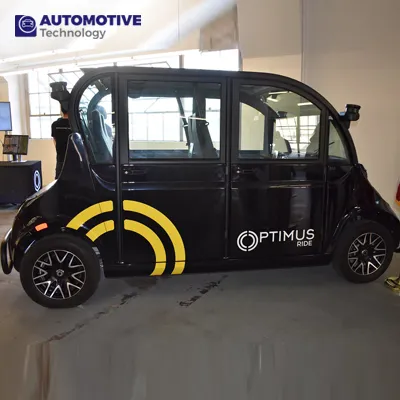
AV also known as all a self-driving car and the concept of such vehicle has been discussed for several years now. What was once only in futuristic movies and television shows is now about to be trialed out by many of the biggest technology companies and auto makers worldwide. Automated cars are considered a dream comes true for many because everyone dreams of getting into a car, typing the destination and then get a seat back and relax while the car takes the role of both the driver and the mapper on its own. However how near are we to fully automated cars where cars drive by themselves without any adjuration from a human being? Well let me explain what is an autonomous vehicles right now where we are what challenges lies ahead to reach the fully automate vehicles.
What Exactly Are Autonomous Vehicles?
Self-driving cars employ the following technologies; sensor system, AI, ML, and instant information processing for driving with no attendant human influence. These vehicles usually rely on sensors like radar, LiDAR (light detection and ranging), cameras and GPS to feel their environment and respond. For instance a self-driven car is capable of identifying other vehicles, fellow human beings, traffic signals as well as road sign-posts and will automatically self-adjust the speed and direction it is going to take.
Today’s AV systems are mostly sophisticated, and incorporate machine learning algorithms that adapt as the system accumulates data on performance gathered through millions of miles on the road. All of these vehicles get smarter with every drive and are capable of dealing with complicated scenarios like entry onto the highways, narrow city roads and even objects on the roads. The aim is to design a vehicle capable of performing as has a human driver or even better under any situation.
Levels of Automation
In order to determine how close we are to seeing fully autonomous cars on the road it is useful to go over the levels of car automation. The Society of Automotive Engineers (SAE) has developed a widely recognized framework that classifies vehicle automation into six levels, ranging from 0 to 5:
• Level 0 (No Automation): At this level there is no presence of the advanced driving features such as auto pilot. The driver is in full control of the particular automobile at all times.
• Level 1 (Driver Assistance): Steering assist or advanced cruise control, by which the car automatically maintains a safe distance from another vehicle, also come under this class. These systems undertake some specific driving operations but the driver must be attentive and control the car.
• Level 2 (Partial Automation): Here the vehicle is capable of performing some of the driving functions including steering, throttle control as well as brake but the driver is expected to be always on standby to resume control at any time he/ or she is required. Autopilot is Level 2 automation – or the car can control as many as six of the eight possible functions that make up an automobile.
• Level 3 (Conditional Automation): In this case the vehicle can perform most of the operations related to driving in certain conditions such as highway. But the driver has to stand by and be prepared to seize control at any one point if the car is unable to tackle a certain situation.
• Level 4 (High Automation): Things today have advanced to the point that the car can do most everything on its own without the driver having to do anything. It may not be effective when there is bad weather or when the road is ill lit, poorly marked or is under construction. There is; however do not regard themselves as Level 4 and Waymo’s autonomous taxis are also an example of Level 4.
• Level 5 (Full Automation): At this level, the car runs itself without any assistance from the driver under any circumstance. It may work in any situation and weather; self-sufficient model that does not require a steering wheel, pedals, or drivers.
At the moment, a majority of the cars being sold in the market are between level 2 and level 3. Level 4 automation is being piloted in proving grounds today and the ultimate aim of Level 5 automation is still under development.
Technological Progress: How Close Are We?
Although full automation looks appealing, it has not gone far enough to be perfected. Tesla, Waymo, Uber and GM have come close but a fully autonomous car to drive without any human input is still an inventible pipe dream.
Another consideration that plays a great role in attaining complete automation is refining the sensors, and artificial intelligence of such automobiles.
• Sensors: Self-driven vehicles employ the use of radar systems, cameras and LIDAR systems to view the environment around them. They are responsible for measuring the distance for object and mapping of the terrain to identify objects in the way. But as is now apparent, sensor technology is not universally infallible. However, weather conditions such as rain or fog can obstruct the camera and LiDAR vision thus, the car is likely to have a wrong impression of the road conditions.
• Artificial Intelligence: AI is responsible for the data gathered from several sensors and making the decision at an early stage as swiftly as possible. Using big data, machine learning algorithms are trained to see the objects and to predict the actions of other participants in traffic flow, and to act within complex interactions. Nevertheless, there is still a problem that prevents the creation of AI which can deal with unexpected situations on the road.
• Mapping and GPS: Self-driving cars are mode on data and directions on the road and this require precise maps and geographical position system. Unfortunately even with high end GPS technology there are always problems such as in areas with large buildings or where the strength of the signal is low such as in large mountains. Moreover, real-time mapping data indicate that they should be updated frequently due to the change of road status including construction or new traffic status.
Challenges in Achieving Full Automation
However, there are several major issues that still define the developmental path of automotive systems with autonomous drive. Level 5 of autonomous operation, where vehicles will not need input from humans at all circumstances, presents two major challenges, or technical and social.
1. Technology Limitations: Modern self-driving cars are being developed to handle some of the most challenging and unpredictable situations out on the road, however they still have their problems. For instance a construction zone with washed up or obscure marks on the roads or an abrupt object on the road can throw off the responsibilities of the AI. Moreover, adverse weather, for example, rain, sleet or fog affects the functioning of sensors and cameras on which AVs depend. When designing an autonomous car, it must function at Level 5, which means that it has to perform better than a human in such environments.
2. Safety and Reliability: The two most important features of self-driving cars are security. As the AV technology seeks to minimize an occurrence of an accident that is mostly brought about by human interference, self-driving cars have hit the road and got involved in accidents. For instance early this year, an Uber self-driving car fatally struck a pedestrian in Arizona because it failed to notice the victim. Such occurrence show that the AVs require more intense testing and safety measures that will demonstrate that AVs have the capability to take on the chaos of road operations without endangering lives.
3. Regulatory and Legal Issues: Self-driving cars are not yet very old in the auto world; therefore, there is still much legal and regulatory development to be achieved. Currently there are no clear norms, regulating issues of insurance, responsibility and safety of AVs, in particular. According to researchers, the key issues include the following; For example, who is to blame if a self-driving car is involved in an accident? Who is manipulating the devices: is it the manufacturer, the software developer, or the person in the vehicle? Currently governments around the world are developing the legal framework under which self-driving cars will be able to operate lawfully but the process is a rather lengthy one.
4. Public Trust and Acceptance
Still, the problem of how to convince the general public of the validity of automated vehicles may remain one of the largest challenges even in the face of development. Some people fail to accept the fact of fancy technologies such as cars that have the ability to drive on the roads without the necessity of interference from the humans. The issues affecting the acceptance of autonomous vehicles include; safety, dependability, and privacy. The realization of full automation in the automobile requires assurance of safety, reliability, and security of developed systems by manufacturers.
The Road Ahead: What Can We Expect?
Thus, with all the dreams about fully Autonomous Cars not yet being a reality, there are good reasons for optimism. An improvement has been observed in recent years, and this indicates that the eventual full automation process is still being approached and is not impossible. Here’s what we can expect in the coming years:
• Level 4 Automation in Specific Environments: Perhaps in the next ten years Level 4 autonomous vehicles may be more popular in introducing in certain areas like cities, industrial areas, and college campuses. These environments are more manageable than conventional environments, hence the optimal safety of the AVs.
• Improvements in Driver Assistance Systems: While promoting fully autonomous vehicles is not viable in the immediate future still, the development of driver assistant systems will only advance. Almost all driver assist technologies such as, autonomous emergency braking system, adaptive cruise control, lane keeping assist, and automated parking are becoming more common in today’s automobile industry making driving safer and more comfortable.
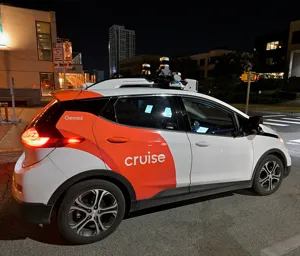
• Autonomous Ride-Sharing Services: Such like Waymo, Uber and Lyft are expanding into compounded robo-taxi services. These could work in-between human chauffeured cars and completely self-driving vehicles and give the public a chance to use AV technology while being under supervision.
Conclusion: The Future of Transportation
The prospects of self-driving cars are great, however, no one today is driving a completely self-driving car. Before we can get to Level 5 automation, technological, regulatory, and societal issues yet remain. That said, we are advancing in sensors, AI, and mapping solutions and continuing to test and refine which offers hope for progress.
As we move forward, the dream of a world where cars drive themselves may not be as far off as it once seemed, and the future of transportation is sure to be revolutionized in ways we can only begin to imagine.
 Media Pack Download
 Newsletters
 Industrial Events