Regenerative Braking Systems: How EVs are Changing Braking Technology
Over the past 10 years, electric vehicles have revolutionized mobility through sustainable energy solutions advancing more significantly in the regenerative brake system of automobiles. This is different from normal braking systems in which energy used by the vehicle or one tapped from the battery is used to create kinetic energy during braking that is never apprehended back so as to serve a later purpose. For information on how regenerative braking is implemented, where and how it can be applied, as well as its effects on now and future vehicles – read on.
1. Understanding Conventional Braking
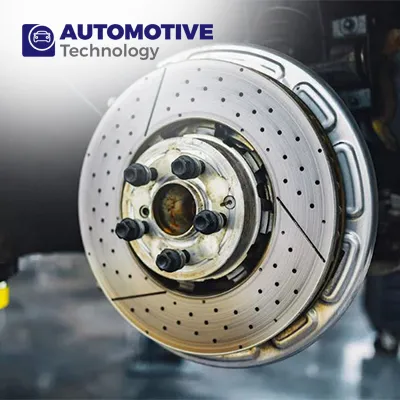
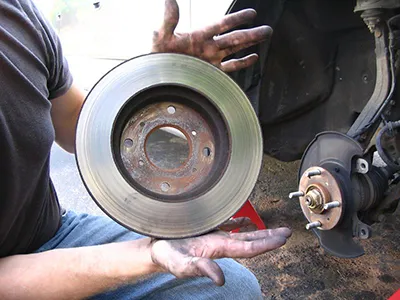
Before going into more detail about what is called regenerative braking, let us consider what traditional types of brakes are. In virtually, all gasoline or diesel automobiles, there is a type of braking commonly called friction braking. Whenever the driver applies pedal pressure, brake pallets apply pressure on brake rotors where they come into contact and thus slow down the wheels. This friction converts kinetic energy that is energy in motion, directly to heat energy which simply dissipates into space. It does a good job of returning the car to idle for a fairly long period of time and of course, all for naught.
Car manufactures in the past years endeavored to enhance the efficiency of the friction brakes and yet its operating principle entails conversion of energy into heat energy. Regenerative braking work on premise of using this lost energy and harnessing it in some form or the other so as to use it to our advantage.
| Also Read: EV & Advanced Braking Technologies: Driving Safety and Efficiency Forward |
2. The Basics of Regenerative Braking
Regenerative braking systems work on a simple principle: rather than energizing molecules to become heat, they store the kinetic energy and turn it to electricity. When the driver pulls the brake pedal of an EV or hybrid vehicle, the car’s electric motor becomes a generator in reverse. This generator mode enables the motor to again capture the motion energy of a car and convert it into electrical energy. This energy is then sent back to the battery to provide a composite charge and this give the vehicle a longer charge.
In this system, the electric motor plays a dual role: It is responsible for powering the vehicle during acceleration and charge generating during deceleration. This is made feasible through the reversible characteristic of electric motors. Regenerative braking system can capture a large percentage of energy lost during normal braking, something in the vicinity of seventy percent.
3. How Regenerative Braking Benefits EVs
a) Extending Driving Range
Among the various problems associated with an electric vehicle, there is something called ‘range anxiety’. There is also one other disadvantage of using these cars, which is how these cars drain the battery to produce power for the use in the vehicle; there is however regenerative braking by which a small amperage is charged to the battery with each stop. Regenerative breaks do not replace the need to charge but the additional distance that is gained can vary from 10-30% depending on the driving cycle and efficacy of the system.
b) Improving Energy Efficiency
Due to the fact that regenerative braking handles the energy which would otherwise get wasted in the process, it automatically enhance on the energy usage of the car. Traditional automobiles cannot retain the energy that was used to accelerate, the energy being dissipated during a braking process. Regenerative braking, though, captures some of that energy and brings efficiency in the drive cycle of the EV higher. This is especially helpful in urban driving conditions where traffic is often congested and frequent slowing down creates the prospect of major energy efficiency gains.
| Also Read: Braking System Maintenance: How to Keep Your Vehicle Safe and Efficient |
c) Reducing Brake Wear and Maintenance Costs
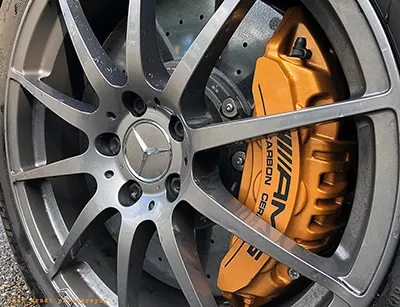
This means that because regenerative braking reduces the use of friction brakes this also has the advantage of putting less wear and tear on brake pads and rotors. It can also result in reduced maintenance expenses for owners of the electric vehicles, hence you find that electric vehicles are cheaper expensive to maintain. Due to the less usage of friction brakes the life of the friction brakes is higher and therefore less number of brake wears during the life cycle of the vehicle. This is a positive factor that point to cost saving about the durability of regenerative braking.
4. The Types of Regenerative Braking Systems
Regenerative braking system can be different depending on a specific make and model of electric or hybrid vehicle. There are two main types:
a) Series Regenerative Braking
In series regenerative braking, the electric motor gets to work by slowing down the vehicle whenever the brake is applied. This system is most efficient when a gradual slowdown is required for the car. However, if there is an impendent standstill needed, or very fast deceleration, then the friction brakes will be added to the regenerative system’s action. In this system, the control of regenerative and friction braking is done via a control system of the vehicle.
b) Parallel Regenerative Braking
The second type of regenerative braking is called parallel regeneration braking where regenerative and friction brakes are acting in synergy and slow down the car. This system is intended to provide the maximum use of regenerative braking but falls back on the friction brakes when more braking force is required. Parallel systems are most useful in high performance electric vehicles due to the possibly increased demand for fast stops or better braking.
5. Challenges in Regenerative Braking
Despite its benefits, regenerative braking does face a few challenges:
a) Limited Braking Power
Regenerative braking may not suffice to give cars enough stopping power especially in an emergency. In such instances, the friction brake must come to the aid of the situation. Manufacturers integrate both systems so they complement one another; however, using regenerative braking to stop suddenly is impossible.
b) Battery Health and Capacity
The amount of energy that regenerative braking can collect hence varies with the state of charge of the battery. Unfortunately, near the end of a battery charge, the device cannot take much more current, and consequently, the regenerative system cannot recover much energy then either. In such situations, the role of friction braking will increase. Further, excessive charging and discharging cycles may be detrimental to battery life, however, this issue is essentially inapt in contemporary models of EV batteries.
c) Energy Recovery Efficiency
Some of the kinetic energy cannot be captured by the regenerative braking systems for instance. That is why a factor of speed, temperature or the state of the road has an impact on how much energy the system is capable of capturing and transforming.
6. The Future of Regenerative Braking
The regenerative braking is also simple to enhance as they improve the technology in electric vehicles. Future systems are expected to construct more complex energy management algorithms and improved battery control systems. Efforts are also being made in the development of ultra capacitor, which is known to have ability to store and discharge power more quickly than battery. Such innovations could greatly help improve operations of regenerative braking systems, especially in demanding driving applications.
Further, with advancement in technology especially on the area of self-driving mode, the regenerative braking could contribute more on the auto energy control. For instance, self-driven EVs could potentially bring better regenerative braking depending of course on sophisticated machine learning algorithms. For example, a car on autonomous mode might see stops a long time in advance and could have a much more efficient manner of slowing down.
7. How Regenerative Braking Impacts Driving Experience
Traditional brakes depend on friction, while regenerative brakes use an electric motor to slow the car down: new EV drivers’, have a relatively different kind of experience. Nearly all present-day EVs have a function referred to as “one-pedal driving.” The depressing of accelerator during one-pedal mode also enables the use of regenerative braking system that slows the vehicle without actually applying the brake pedal. The above feature can make the driving more natural and less boring, especially when driving in the interior city regions. But it will take some times to adapt, since it makes a completely new type of deceleration, which is not inherent to every car.

8. Regenerative Braking Beyond EVs
Even though regenerative braking is today considered as the characteristic feature of electric and hybrid vehicles, it may have the application in other types of transport. Originally introduced to locomotives, regenerative braking can be applied to any vehicle – from trains and buses to bicycles. Modern trains already use regenerative braking which leads to the feeding of power back into the electrical supply system whenever the train slows down. Since the drive towards the use of sustainable energy continues to be adopted, it is expected that regenerative braking will be adopted in more forms of vehicles and equipment.
Conclusion
It is, therefore, with great strides that regenerative braking can be noted as having been adopted in automobiles especially electric ones. Integrating this braking system into electric vehicles allows the conversion of the braking force into electricity, which at the same time increases efficiency, range and decreases the amount of wear on the brakes. While regenerative braking may not completely substitute conventional braking means, it becomes an important supplementary system that increases energy efficiency and environmental friendliness of car operation. This paper has explored the subject of regenerative braking systems in much detail and given evidence of their effectiveness and reliability, it is expected that because of its importance in reducing undesirable energy outcomes, regenerative braking systems it will continue to evolve with advances in technology and become an even more important tool as we shift our alignment towards a more sustainable environment.
In an environment where people pay much attention to energy conservation and environmental conservation regenerative braking helps to make people aware that in this world, there are ways that make even acts such as slowing down productive. Since most of the drivers are signaling their intention to shift to EVs, regenerative braking is set to advance further, which remains a positive development in braking technology as the world goes through changes to live a sustainably conscious lifestyle.
 Media Pack Download
 Newsletters
 Industrial Events