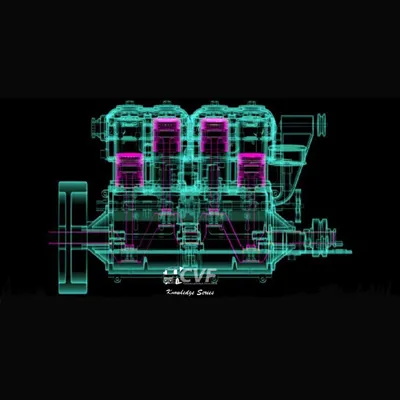
Core Automotive Components & Suppliers: Material Innovations Powering the Industry
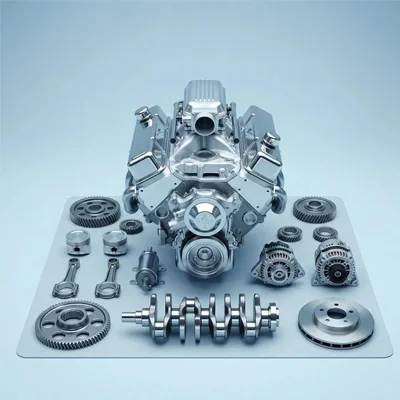
Not All Transformation Is Visible
When we generally think of the transformation of the automotive industry, the first things that come to mind are electric, software or autonomous. Fair enough — those are visible shifts.
But if you spend some time looking at how vehicles are actually being built today, a different story shows up. The real shift is happening inside the components — in the materials themselves.
Across Automotive Components Manufacturing, there’s a gradual but very real move away from relying on a single material type. Steel is still there, yes, but it’s no longer the whole story. Suppliers are mixing materials, testing combinations, and sometimes even redesigning components just to make better use of them.
For Automotive Parts Suppliers, this isn’t a trend you can ignore and “adapt later.” It’s already shaping RFQs, design expectations, and even long-term contracts.
Materials Are Now Part of the Strategy
Earlier, material choice used to sit somewhere in the background. It mattered, but it wasn’t always a boardroom conversation.
That has changed.
Today, Automotive Material Innovations are directly tied to things like fuel efficiency targets, emission norms, and even brand positioning. If a car is more efficient, lighter or greener, it has to do with materials.
The thing is, there’s no silver bullet. The use of Advanced Materials in Automotive Industry is more about combination than replacement. You’ll often see steel, aluminum, and composites used together in the same structure.
That has made Automotive component engineering a bit more complex than it used to be. Engineers aren’t just designing parts anymore — they’re balancing trade-offs.
Steel Is Still Doing the Heavy Lifting
There’s a lot of noise around alternatives, but steel hasn’t disappeared. It’s just evolved.
The motor industry is still heavily dependent upon steel, particularly for safety applications. The new steels have less cross-sectional area, but the same strength, so it's lighter.
From a practical point of view, most manufacturers still use steel for:
- structural frameworks
- reinforcement zones
- safety-critical parts
It’s cost-effective, familiar, and scalable — three things that still matter a lot in large-scale production.
Aluminum and Composites Are Filling the Gaps
Where steel reaches its limits, other materials step in.
The push for Lightweight vehicle design has made Aluminum and composite materials far more common than they were a decade ago. Aluminum, especially, has moved beyond niche use and is now fairly standard in certain components.
Composites are a bit more selective in their application. You’ll see them more in EVs or higher-end vehicles where performance gains justify the cost.
Still, the demand for lightweight materials for automotive parts and components is only going in one direction — up. And not just for fuel economy. Weight is range in an electric vehicle (EV) so this is important.
EVs Have Changed the Rules
If there’s one area where material expectations have shifted quickly, it’s electric vehicles.
EV material innovations are not just about making things lighter. They’re about solving new problems — heat, electrical safety, battery protection. These weren’t as critical earlier.
Take battery enclosures. They now need to handle impact, manage heat, and remain lightweight. That’s a tough combination, and it’s pushing suppliers to experiment more than before.
This is also where automotive component engineering is getting interesting. There’s more trial, more iteration, and honestly, a bit more uncertainty than traditional systems.
Performance Isn’t Just Mechanical Anymore
The role of advanced materials in automotive performance and efficiency is becoming easier to notice, even if you’re not looking for it.
A lighter vehicle responds differently. A better thermal material improves battery consistency. Even small changes in material can influence how a vehicle behaves over time.
For fleet operators, these differences show up in maintenance cycles and operating costs. For consumers, it’s more about efficiency and driving feel.
Either way, materials are quietly influencing outcomes.
Sustainability Is Getting a Look In
And today sustainability is a concern.
The automotive industry is making use of green materials, but some are quicker than others. Some players are quicker than others.
Recycling of metals, bio-materials and eco-manufacturing. Not all are scalable, but we're getting there.
This is also impacting Automotive Supply Chain Solutions. Suppliers are now being judged not just on price and quality but also their material sourcing and processing.
Suppliers Are Being Drawn into the Innovation Process
The role of Automotive Parts Suppliers is definitely changing.
Earlier, suppliers would receive designs and manufacture accordingly. Now, they’re often involved much earlier. Material selection, feasibility, even early-stage prototyping — these are becoming shared responsibilities.
Some of the top automotive suppliers driving material advancements are investing heavily in R&D for this reason. It’s no longer enough to be good at manufacturing. You need to understand materials at a deeper level.
Not Everything Is Easy
Of course, none of this comes without challenges.
Cost is still a limiting factor. Advanced materials are not always viable for mass-market vehicles. Manufacturing processes also need adjustments, which takes time and investment.
And then there’s recycling. Some high-performance materials are difficult to reuse, which complicates sustainability goals.
So while adoption is happening, it’s not uniform. Some areas are moving faster than others.
Where This Is Heading
The message for companies in the Automotive Components Manufacturing industry is pretty clear though, the industry needs to be more flexible than ever.
Understanding how to work with different materials, the pros and cons and how to use them is key.
It's not a swift evolution, it's an evolutionary process. And it's hard to control.
Closing Thought
The automotive industry is discussed in terms of "events". But material innovation is a quieter force.
Still, it’s doing a lot of the groundwork.
From Automotive Material Innovations to evolving Automotive Supply Chain Solutions, materials are shaping decisions in ways that aren’t always obvious — but are definitely impactful.
And for both manufacturers and suppliers, this is one area where staying still isn’t really an option anymore.
 Media Pack Download
 Newsletters
 Industrial Events